Seasonal
Events
← Portfolio
Overview
I owned seasonal events on FarmVille 3, from the first concept through launch and the optimization that followed.
A seasonal event is a limited-time layer that sits on top of the core game and gives players a fresh reason to log in during a real-world moment — whether that's spring, a holiday, or a harvest. My job was to make each one land: design something that fits the season, build the systems behind it, get it tested and shipped, then watch how it performed and feed that back into the next one.
Over time the bigger part of my work shifted from designing individual events to improving the machinery that produced them, so the team could ship more of them, faster, for less.
What I Was Aiming For
Design That Serves the Moment
Before any theme or mechanic, I'd define what the event was actually for — which metric it needed to move, who it was aimed at, and what constraints I was working inside. Tying the design to a business goal up front kept later decisions honest, because I could always ask whether a feature served the objective or just looked nice.
Systems That Scale
The goal wasn't just to ship an event — it was to ship a better event than the last one, for less effort. That meant turning the repeated pieces into reusable frameworks so the team could run a fuller seasonal calendar without a matching increase in work.
Content That Keeps Players Coming Back
On a seasonal calendar that repeats every year, differentiation is what stops events from blurring together. Each event needed something that made this one distinct — a mechanic, a theme angle, or a reward structure that players hadn't seen the last time this season rolled around.
How It Came Together
Every event started with a reason to exist. I'd define the target metric, the audience, and the constraints — budget, timeline, art capacity — before touching any theme or mechanic. From there I'd develop the concept and work out what made this event different from the last one on the same seasonal beat.
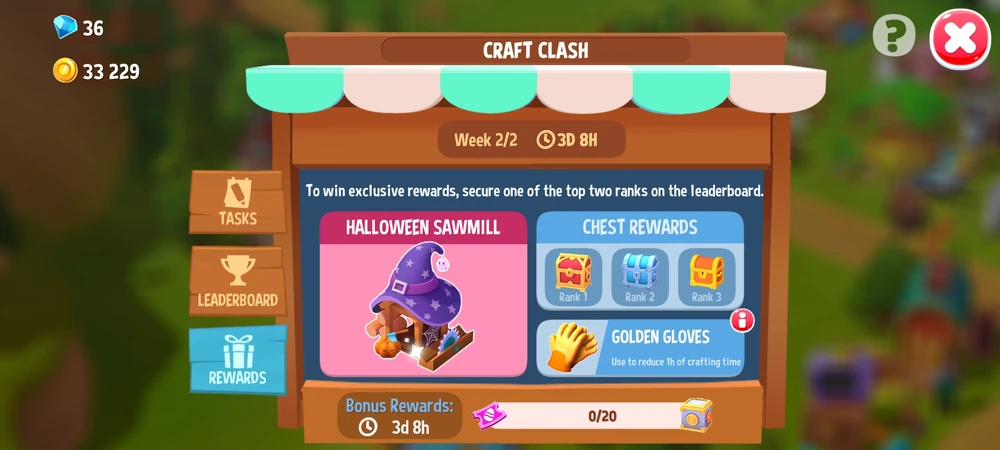
This is where most of the design happened. I built the core loop and progression path a player follows from first task to final reward. On top of that sat the economy and monetization layer: event passes and time-limited offers that gave players who wanted to go deeper a way to do it, without walling off the players who didn't spend. Content planning — assets, light narrative framing, quest structure — came out of this phase too.
Once the design was solid I'd get it into a playable build and refine the UX against how it actually felt rather than how it read on paper. Playtesting and balancing used internal testing alongside data modeling to find where the difficulty or pacing was off. I also set up the tracking and KPI instrumentation so each event reported the data I needed, and ran A/B tests to validate the choices I was unsure about before full release.
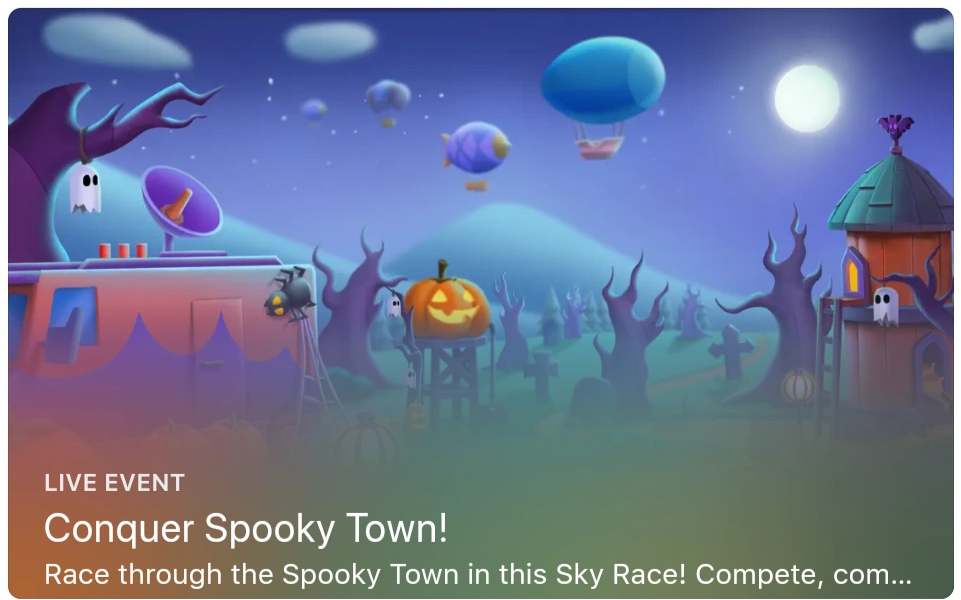
Before launch I'd do the final polish pass, tighten the UX, and align with marketing so the event went out with the right support behind it. After it went live I monitored performance and made real-time adjustments — a live event rarely behaves exactly the way the model predicted. When it wrapped, I ran a post-mortem on what worked and what didn't, and documented the learnings so the next event started from a better place.
The part of this work I'm proudest of isn't any single event — it's what I changed about how we built them. I turned the repeated pieces into reusable frameworks: templated event loops, progression structures, and economy setups that could be reskinned and retuned for a new season instead of rebuilt. Each new event cost less to produce than the one before, the development cycle got shorter, and every event shipped fed both content and learnings back into the frameworks the next one used.
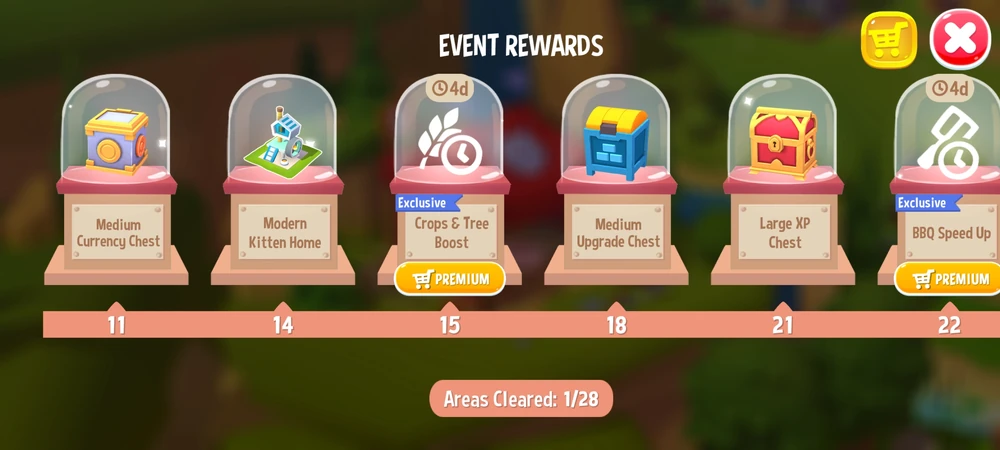
What I Owned
End to end — from brief to post-mortem. I designed the event, built the systems and economy, ran playtesting and balancing, instrumented the tracking, shipped it, monitored it live, and documented the learnings. I also owned the pipeline frameworks that made every subsequent event faster and cheaper to build.
Events Delivered
Seven seasonal events shipped end to end.
- Spring Blossom Festival
- Easter
- Summer Harvest Carnival
- Monsoon Market
- Halloween
- Thanksgiving Harvest
- Winter event
Impact
- Lifted short-term retention by giving players fresh loops and a limited-time reason to act
- Improved monetization through event passes and time-limited offers
- Deepened engagement through layered progression and rewards
- Brought lapsed players back during seasonal moments, strengthening reactivation
- Reusable frameworks lowered the cost of every future event and shortened the cycle
Fishing
Mini-Game
Overview
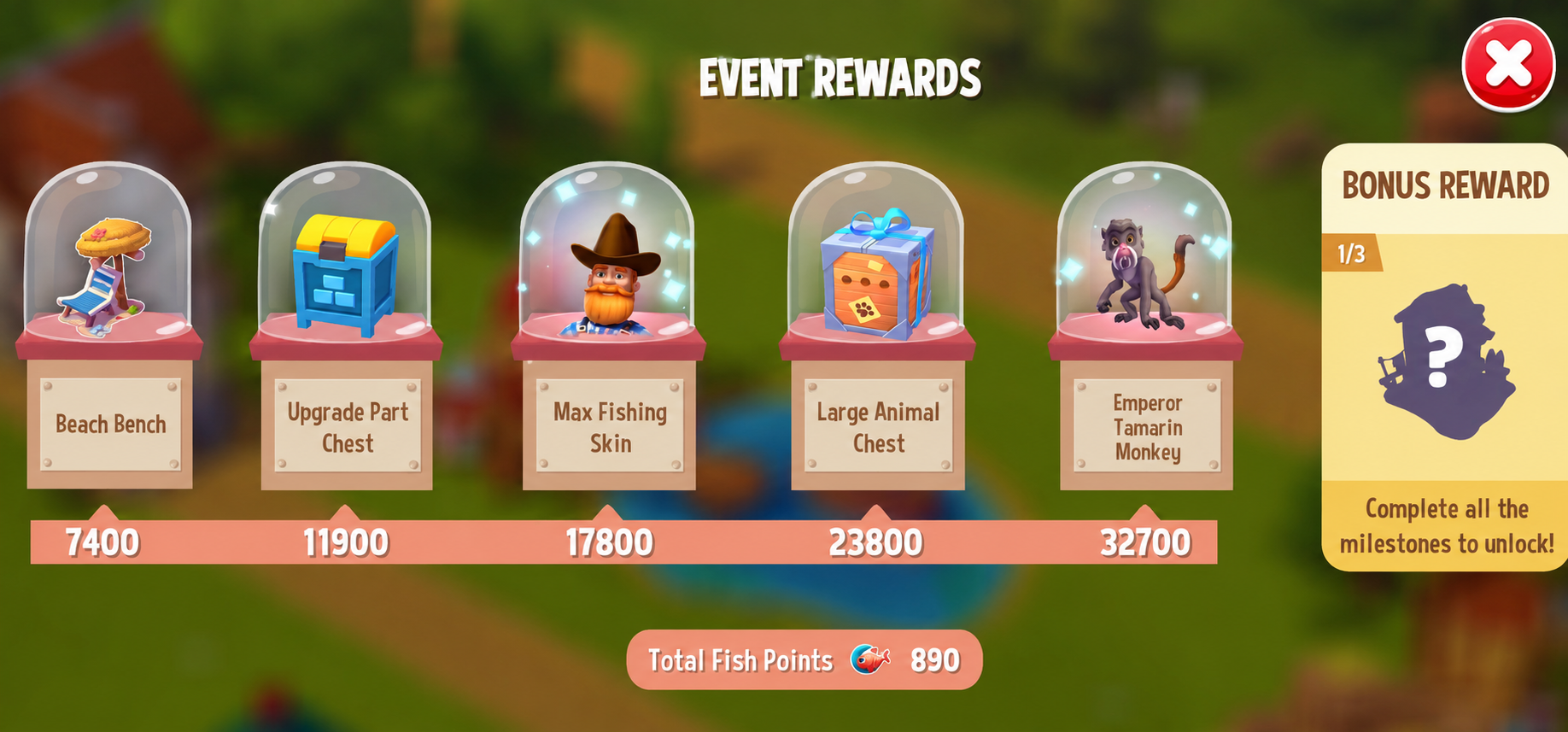
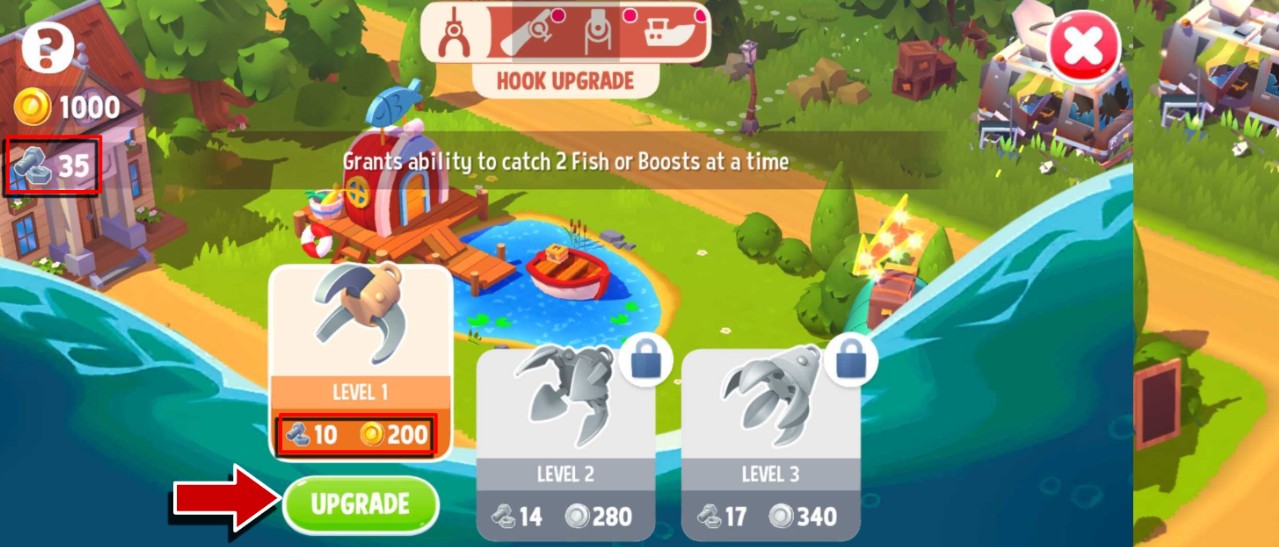
I designed and delivered a limited-time fishing mini-game for a live event in FarmVille 3, and I owned it from the first idea through to implementation.
The brief I set myself was to make something that felt relaxing to play but still had enough pull to bring players back, and that sat naturally inside a farm simulation instead of feeling bolted on.
I designed the core loop, the progression, the reward systems, and the moment-to-moment feel of casting and catching, then balanced all of it so the activity stayed calm without becoming boring.
Design Thinking
Why Fishing Fit the Game
FarmVille 3 already had a strong animal collection loop, and fishing was meant to sit alongside it rather than compete with it. It gave players a different texture of activity — a quieter, skill-based break from farm management — and a fresh daily reason to log in for fishing rewards and progression milestones. The accessibility was deliberate: low-friction enough for casual players, but with room for mastery that made it land with mid-core and returning players.
Building the Loop from Scratch
There was no fishing system to build on, so I designed it from nothing. The heart of it was the cast-and-catch moment: simple to perform, satisfying to repeat, and quick enough to fit into a short session. Around that I built progression milestones and the reward structure that paid the activity off. Getting the tone right was the hard part — too demanding and it stops being a break from farming; too passive and it stops being worth returning to.
Fitting It Into the Live Game
A live game has a lot of moving parts, so I worked closely with product, art, and engineering to slot the feature cleanly into the existing ecosystem. I aligned the design with the event's goals and the monetization strategy, building spend points around bait, retries, and progression accelerators — optional convenience rather than progress gating, so it lifted spender engagement without disturbing the core economy players already trusted.
How It Came Together
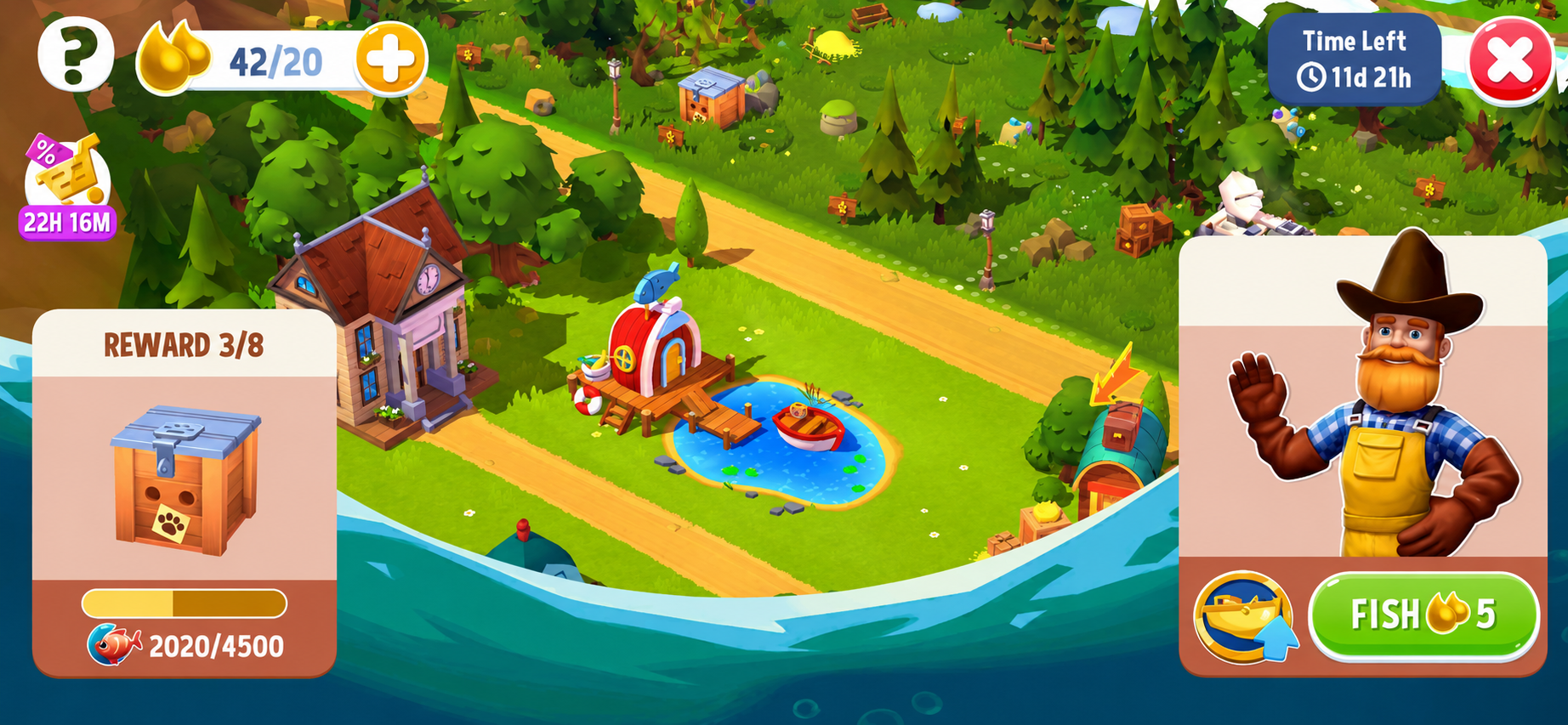
I started by defining the cast-and-catch interaction — the single repeatable moment the whole feature rests on. It had to be satisfying on the first try for a casual player and still feel skilled enough that repeat plays didn't feel mechanical. That meant keeping the input simple but giving feedback that made each catch feel earned.
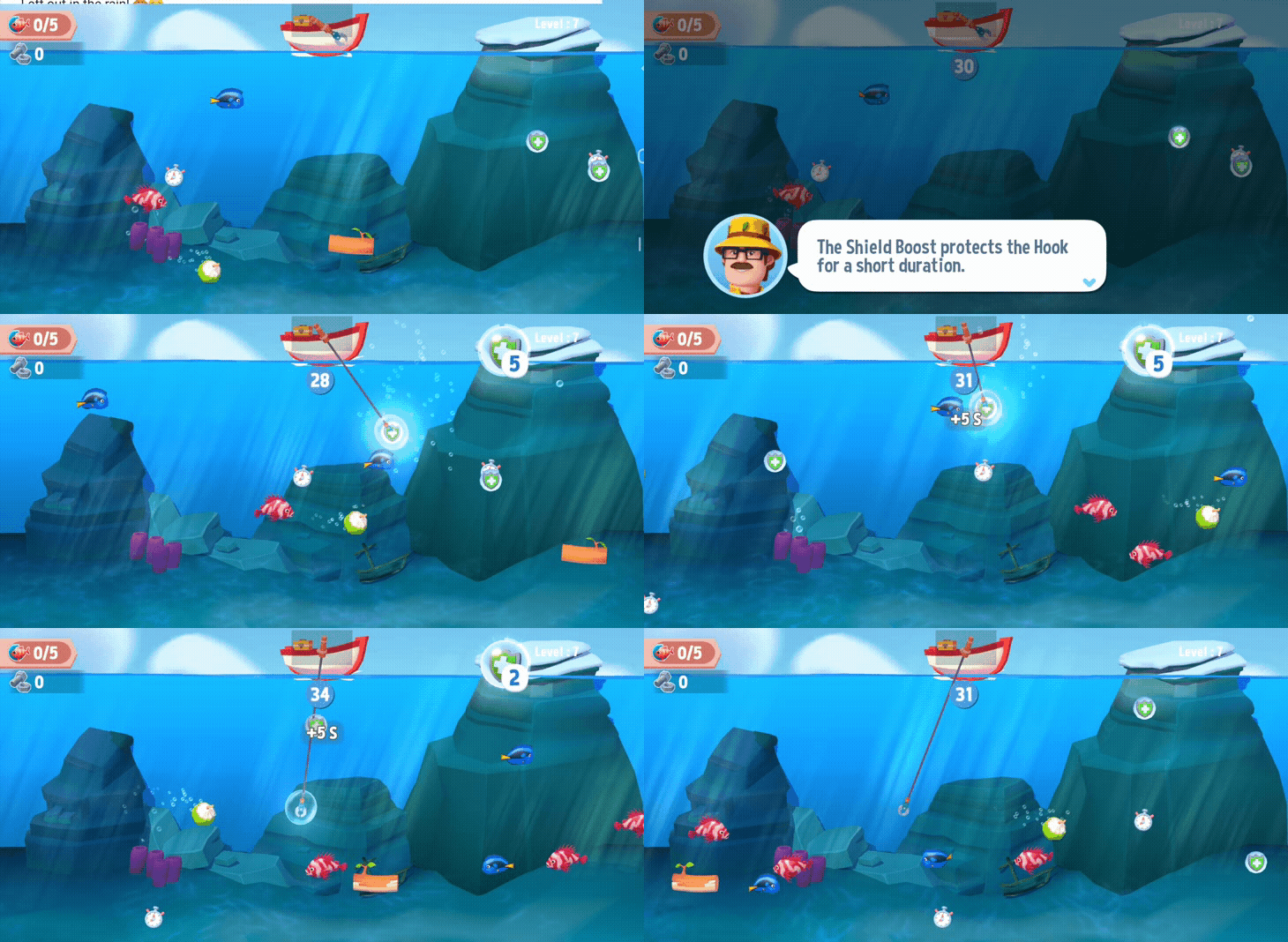
Around the core loop I built a milestone-based progression system with catch targets, rare species, and tiered rewards. The goal was to give players enough to chase across the event window without requiring constant play — each session should feel like meaningful progress, not a grind.
Most of my iteration time went into holding the right tone. I tuned catch rates, difficulty curves, and session pacing through repeated playtesting until the loop stayed relaxing rather than fiddly. The target was a player who finishes a session and wants to come back tomorrow — not one who finishes frustrated or one who finishes without feeling anything.
I designed the monetization layer around optional convenience — bait, retries, and progression accelerators — so spenders got a better experience without non-spenders hitting a wall. Spend points were positioned at moments where a player had already engaged enough to feel invested, which is when the decision to spend feels natural rather than forced.
What I Owned
I owned the feature end to end — core loop design, progression and reward systems, balancing and tone, monetization integration, and cross-functional coordination with product, art, and engineering through to implementation.
How It Played
The fishing game moved the metrics it was designed to move.
Adding a low-friction, skill-based activity gave players a reason to come back daily. Because it was a quick, repeatable loop layered on top of core play, it extended average sessions and worked as an easy entry point into the wider event — players who started fishing tended to carry on into the rest of it. The qualitative signal was just as clear: sentiment in reviews and CSAT skewed positive, with players responding to the relaxing feel and the sense of mastery the loop gave them.
The Numbers
- D1 retention up ~2–3 points across the event window
- D7 retention up ~1–2 points across the event window
- Average session length up ~10–15%
- Event participation reached ~60% of active players
- ARPDAU up ~3–5% from optional bait, retries, and accelerators
- Modest conversion lift with no cannibalisation of core economy spend
- Engagement above average for an event feature, strongest among mid-core and returning players
Plot Expansion
Feature
Overview
I redesigned how players expand their farmland in FarmVille 3, working in a pod alongside a producer, programmers, and artists.
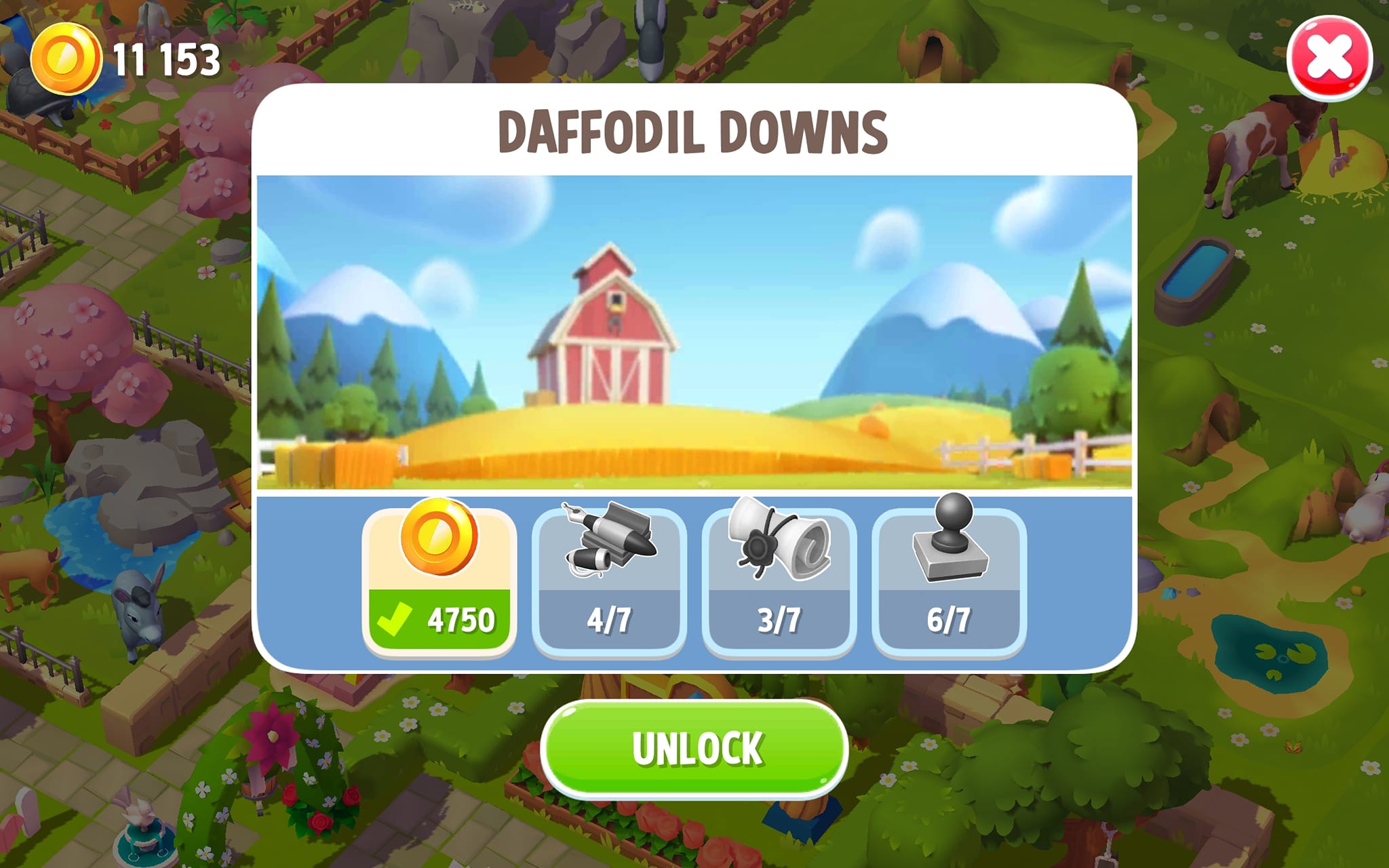
The feature existed for a clear reason: drive engagement and lift retention by reworking one of the most basic things a player does in a farming game, which is grow the size of their farm. I reported to the associate game director and owned the design end to end — from the feature document through to alpha.
The System I Inherited
Level-Gated Growth
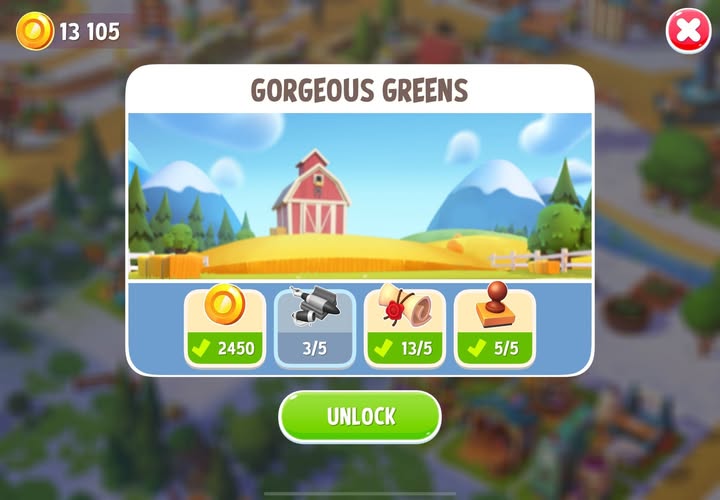
Unlocking new farmland was tied to player level. Players couldn't expand until they'd ground their way up the progression curve, which meant one of the most satisfying actions in the game was locked behind the very thing that slows new players down.
Coin-Cost Friction
Every plot cost coins — the same currency players needed for everything else. Expansion competed with the rest of the economy, turned growth into a drain, and gave players a reason to defer it rather than pursue it.
Completely Solitary
Nothing about growing your farm connected you to anyone else. In a social farming game, that's a missed opportunity — expansion should be something the community pushes forward, not something the individual grinds through alone.
What I Changed
I redesigned the model around player freedom and social interaction.
I removed the level dependency — players were no longer blocked from expanding by where they sat in the progression curve. I took out the coin cost so expansion stopped competing with everything else players were saving for. I kept the adjacency rule, because that part genuinely served the game by keeping farms coherent.
The key move was tying land acquisition to the neighbours feature. Instead of paying coins, players now expand by interacting with their neighbours. That single change turned a solitary coin sink into a reason to engage with other players — exactly the behaviour that keeps people coming back to a social farming game.
Expansion went from something the economy held back to something the social loop pushed forward.
How I Built It
I wrote the feature documents that defined how the new system worked end to end — the design intent, the rules, the progression model, and the social interaction that replaced the coin cost. These gave the pod a shared source of truth before any code was written.
I built out the data side in a set of Excel models that handled resource distribution, the points system, and the progression curve. Getting those numbers right before implementation was what made the new social-gated expansion feel fair and well paced rather than arbitrarily slow or too easy.
A lot of the engineering-facing work was delinking. The old dependencies — level gates and coin costs — were wired through existing files in the game engine. I modified those to unhook land unlocking from level and coins without breaking everything else attached to them, which required careful coordination with the programmers on the pod.
With the old dependencies removed, I added and tuned the new content the feature needed — the neighbour interaction triggers, the social point thresholds, and the reward moments that made reaching a new plot feel like an achievement rather than a transaction.
I worked directly with the producer, programmers, and artists through to alpha, fixing bugs and tweaking the feature until it behaved the way the design intended. This phase was mostly about closing the gap between the spec and the live build — edge cases in adjacency logic, economy interactions, and social trigger timing.
What I Owned
The full feature design — from the first document through alpha. I wrote the spec, built the data models, drove the engine delinking with engineering, added and tuned the new content, and saw it through to a shippable build.
How It Changed the Game
Routing expansion through the social layer changed how players related to the game.
Interacting with neighbours went from optional to the main path for growing a farm. Removing the level gate and the coin cost meant far more players actually expanded, which gave them a stronger sense of growth and progress early in their time with the game. The redesign also eased pressure on the coin economy, making the wider economy healthier to balance.
The Numbers
- Social feature usage up ~30–40% as neighbours became the expansion path
- Land-expansion activity up ~40–50% with level and coin gates removed
- D7 retention up ~2–3 points
- D30 retention up ~1–2 points
- Coin economy pressure reduced — expansion no longer competed with other coin sinks